


Climate control
Air-conditioned storage, with its own system in every unit.
- HVAC per unit
- Dedicated
- Service per unit
- 220V, 150A, 1 or 3 phase
Almost every storage facility in Lee County advertises climate control. Very few will tell you what that means: which system, serving how many units, held to what temperature, at what relative humidity, for how many hours a day.
Here it means one dedicated HVAC system per unit, on your own meter, serving your unit alone, running to your setting continuously. Below is what that is protecting against, material by material.
- Clear ceiling
- 25 ft
- HOA fee
- $1,000 / quarter
Florida air
Five months a year of heat and humidity.
From roughly June through October, Southwest Florida runs daily highs in the low nineties with dew points in the low to mid seventies. Relative humidity commonly sits above 70% overnight and above 90% at dawn. Afternoon thunderstorms add a soaking, then the sun returns and the water evaporates into air that is already close to saturated.
An unconditioned garage does not average that out. It amplifies it. A closed metal or masonry building with a dark roof and no air handling runs well above ambient during the afternoon and then cools quickly after sunset. Every time the air temperature drops toward the dew point, moisture condenses onto whatever is coldest in the room, which is usually metal, and usually the inside of a body panel where you cannot see it.
This is the mechanism behind nearly every storage problem below. It is not the heat by itself and it is not the humidity by itself. It is the daily cycle between them.

Six things that fail, and why.
- 01
Paint and clear coat
Condensation that dries in place leaves mineral deposits that etch into clear coat. Under a non-breathable cover the water is trapped against the surface for hours. Repeated cycles produce the dull, spotted finish that costs a paint correction to remove.
- 02
Leather and upholstery
Heat drives the plasticizers and oils out of hide, which is why a dashboard cracks and a seat bolster goes hard. Humidity does the opposite kind of damage: sustained relative humidity in the seventies is where mold and mildew colonise perforated leather, carpet backing and headliner adhesive.
- 03
Rubber and seals
Door seals, window seals, hoses and belts take a compression set and harden with thermal cycling. Tires flat-spot faster when the compound is warm and the car does not move, and ozone and heat together accelerate sidewall cracking.
- 04
Electronics
Moisture works into connectors and creates green corrosion at pins, which shows up as an intermittent fault years later. Heat shortens the life of electrolytic capacitors in modules and head units. Neither failure announces itself while the car is sitting still.
- 05
Batteries
Self-discharge accelerates sharply with temperature, a lead-acid battery loses charge several times faster at 95°F than at 75°F. Add a modern vehicle's parasitic draw from always-on modules and an unattended car is flat in weeks and sulphated in months.
- 06
Fuel and fluids
Ethanol-blended fuel attracts water out of humid air in a vented tank. Phase separation, corroded fuel system components and gummed injectors or jets follow. Brake fluid is hygroscopic too, and takes on moisture from the air over a long summer.
One system per unit, on your own meter.
- HVAC
- One dedicated system per unit, serving that unit alone
- Control
- Yours, you set it and it runs continuously
- Metering
- Individually metered; you pay for your own consumption
- Electrical service
- 220V, 150A, 1 or 3 phase per unit, enough for supplementary dehumidification
- Envelope
- Insulated segmented doors, 60-mil TPO roof
- Windows in the bay
- None, no solar gain, no ultraviolet exposure
- Shared corridors
- None, your unit opens to the drive aisle

What conditioned air does not do.
It does not replace maintenance. A car that sits for six months in perfect air still wants fuel stabilizer, a tender, correct tire pressure and an occasional run. Our long-term storage page covers that preparation properly.
It does not run without power. If your contents genuinely cannot tolerate an outage, plan a backup as part of your fit-out and raise it with the association first.

Every unit is air conditioned. Start with these two plans.
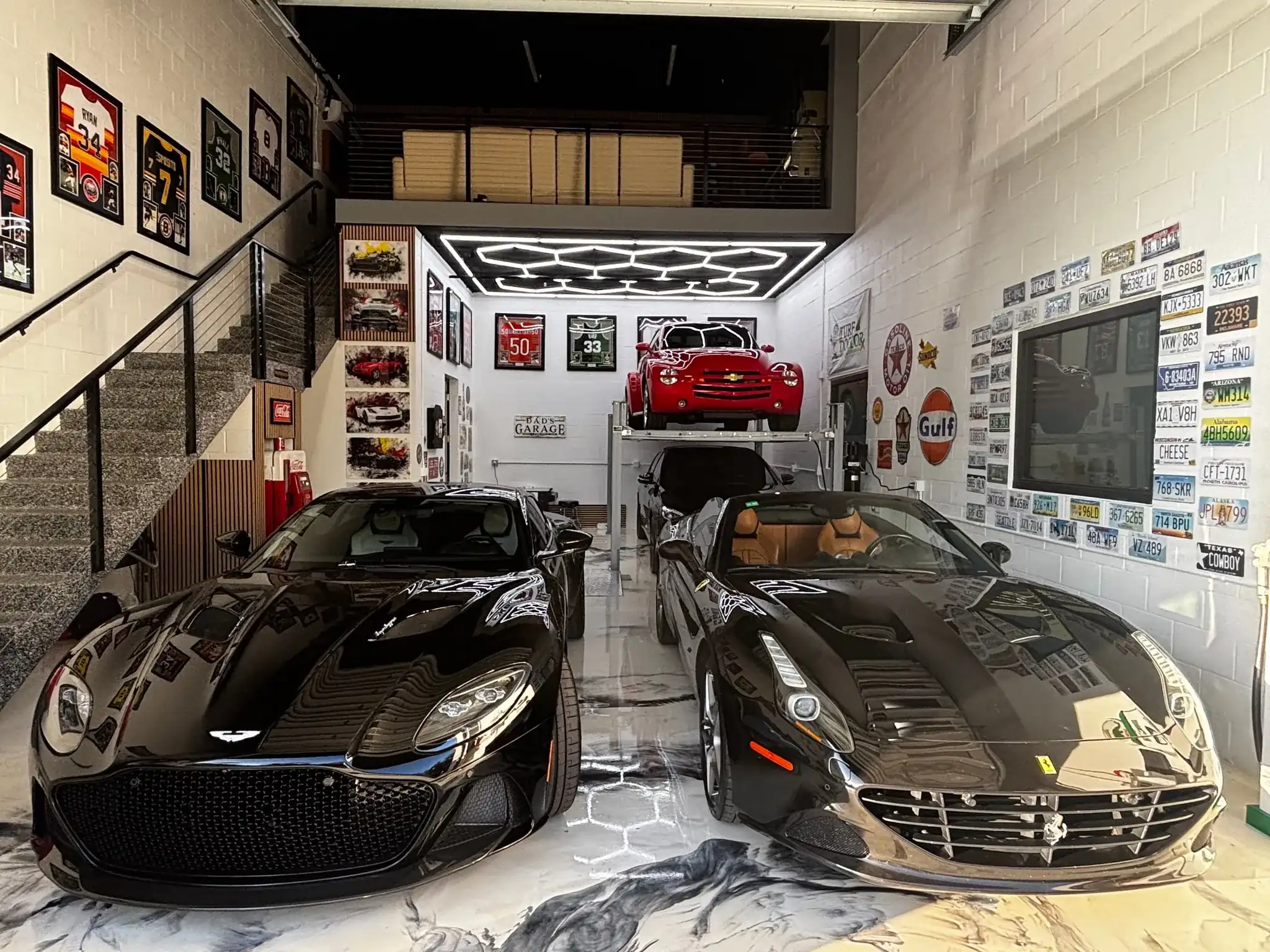
The cars
Four on the floor, more on lifts
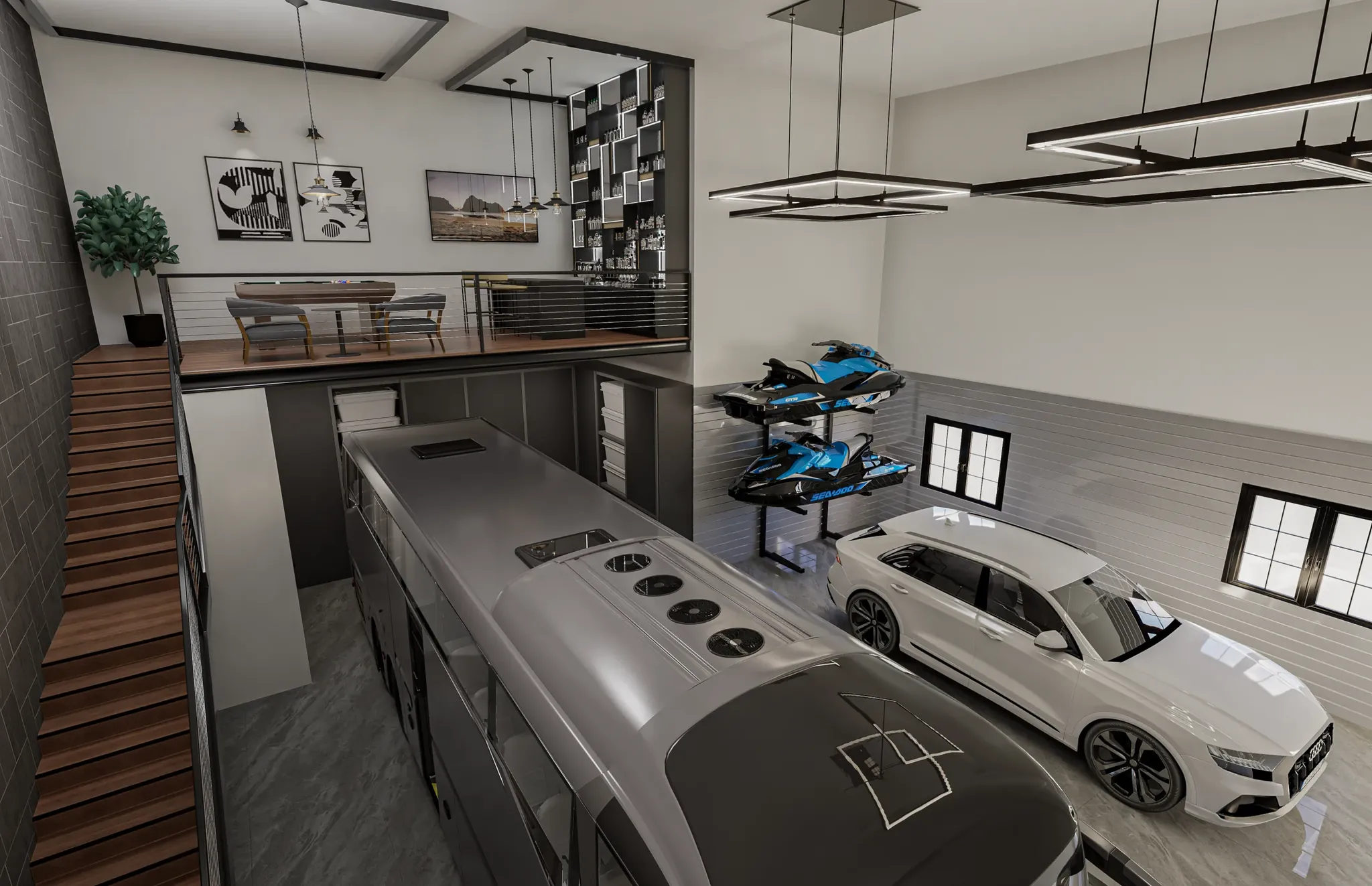
The RV
Driven in with the tow car still hitched
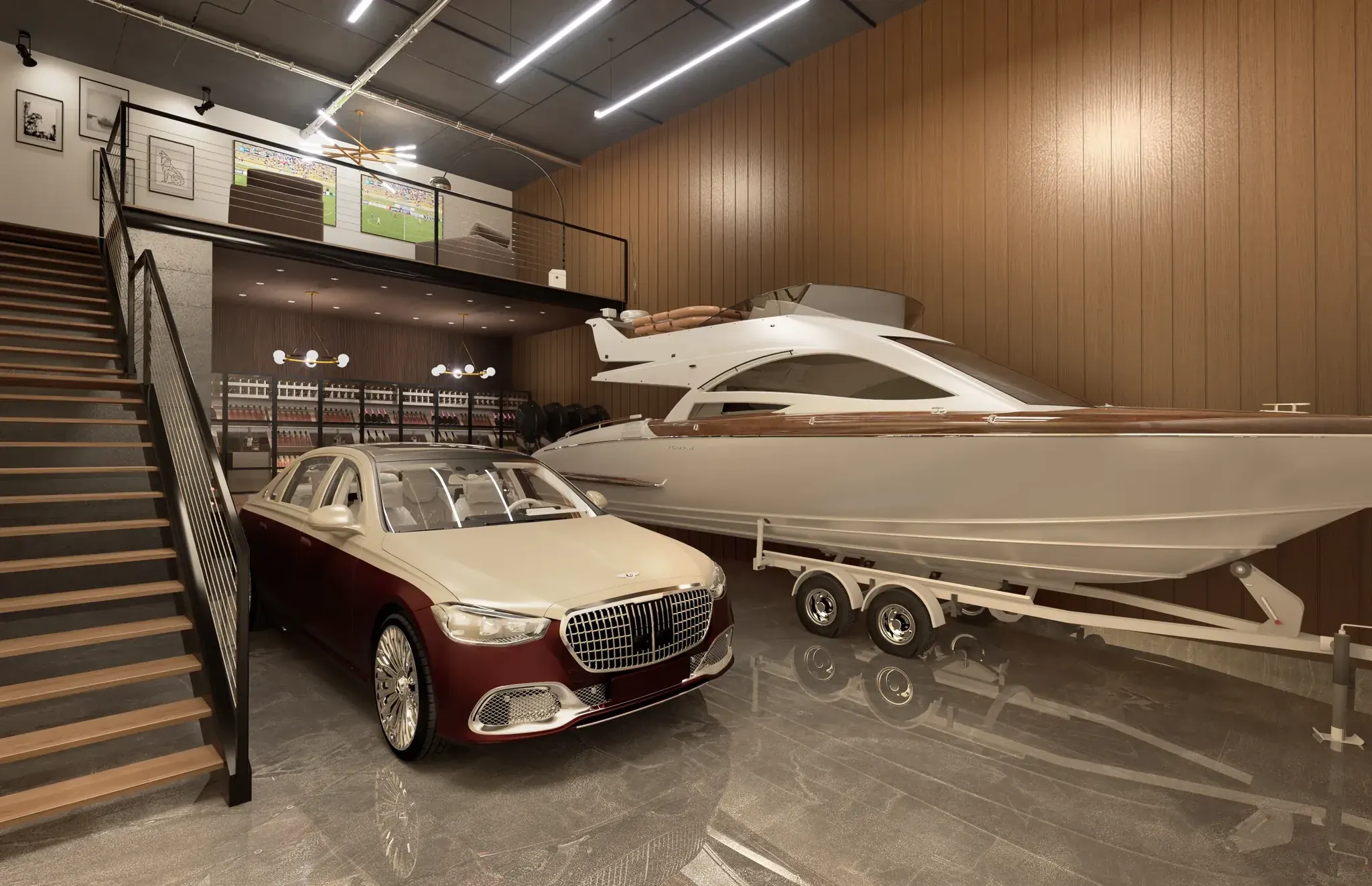
The boat
Trailer and tow vehicle, nine miles inland
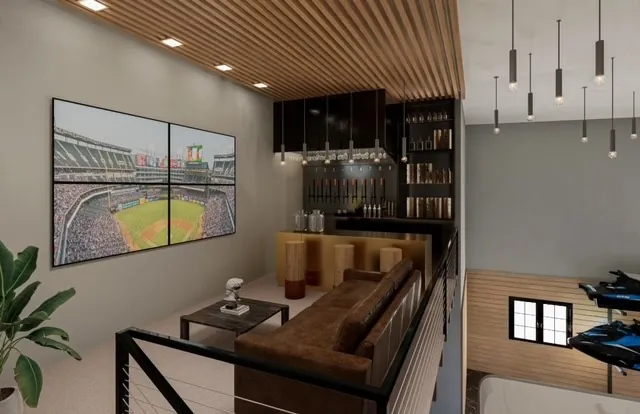
The second floor
320 to 960 sq ft, plumbed for a wet bar


Baron
1,350 sq ft · 320 sq ft second floor · From $399,000
1,350 sq ft with a 320 sq ft second floor, the smallest conditioned volume, and therefore the cheapest to hold at a stable temperature all summer.
Baron plans
Knight
1,800 sq ft · 450 sq ft second floor
1,800 sq ft, for a larger collection where you still want a single conditioned envelope rather than splitting storage across two locations.
Knight plansQuestions about the air conditioning
The site-wide facts, stated once: 170 mph ultimate design wind speed, FEMA Flood Zone X, outside the Special Flood Hazard Area, roughly nine miles inland from the open Gulf, and an association fee of $1,000 per quarter on a 1,350 sq ft unit, increasing pro rata with size. RV dump station on site, included in the association fee. How the building is engineered and what it costs to own are explained in full on their own pages.
Demand a real answer about climate control.
If air conditioning is the reason you are buying, bring us the engineering questions. We will answer them directly.
Best-matched plan
Baron
- Floor area
- 1,350 sq ft
- Second floor
- 320 sq ft second floor
- Price
- From $399,000
For four cars or more with lift(s), a workshop wall and a second floor you will actually use.
Get the HVAC answers, see Baron